 From inside the powder industry
Pricing
Over 200 shops priced the same job. The lowest said $650. The highest said $4,000. Every one of them was serious.
We spent a year reading what this trade says about money. 2,000 prices recorded, 1,000 of them against a named job. Here is what came out, including the one that explains why your quotes never feel right.
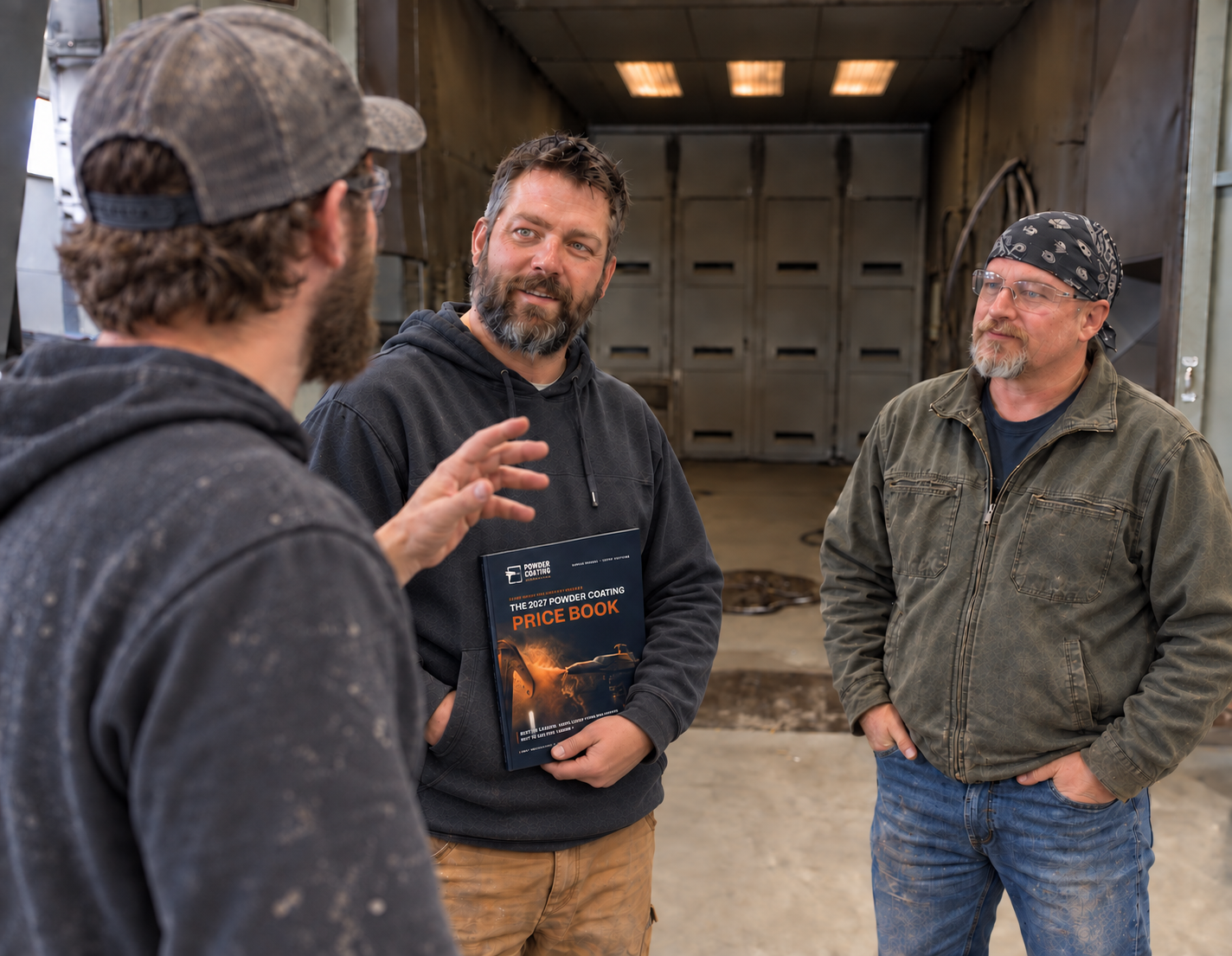
Real footage from a coating shop. Not the job described below.
A shop owner put four patio chairs and a table in front of a trade group and asked what he should charge. Over 200 shops answered. The lowest said $650. The highest said $4,000. The man who asked had already quoted the job at $700, and said afterward it should have been $900.
Same chairs. Same powder. A $3,350 spread.
You could tell yourself furniture is a special case. Old chairs, sentimental owners, everybody wants it done cheap. So we went and looked at the job this trade quotes more than any other.
And it is not just a furniture problem
A coater in upstate New York quoted a man $1,025 to do a set of 18 inch wheels for his Civic. Tires off, blast, coat, tires back on, balanced. Then he got pushback on the number, so he did what everyone in this trade does. He put the job in front of a group of other shops and asked whether his quote was fair.
Fifteen of them answered. One said it was high, that a set is “only worth 1-200 per wheel to get coated” and that plenty of shops do them for $120 to $150 each. Another put the coating on its own at “5-600.” A third, out in Oregon, laid out exactly where he tops out: “I honestly wouldn’t expect to actually charge more than $150 each in most circumstances.” Four wheels at his own ceiling is $600.
Then a shop twenty years in answered the same question: “We charge $1,100 if they are dropping the car off. We get that all day long. Extremely rarely does somebody think the price is high.”
Same four wheels. One man’s absolute ceiling is the other man’s ordinary Tuesday, and neither of them is new at this.
And it is not just those two threads
Ask what furniture is worth anywhere coaters talk and the answers land the same way.
The same question, asked everywhere
A shop owner
Fully disassembled, $350. I use butcher paper to stuff the wells and access holes.
Another shop
I only do them single color. And generally charge $600-650 for that.
A third shop
Pretty standard stuff ... We put it all in the strip tanks , pressure wash , Blast and carry on with Business. Single stage color ... Chairs usually about $225 each and the table really about the same
A fourth shop
I went on a mission to end the lawn furniture curse last summer. I kept raising prices until they weren't bringing them any more, but the ones who did paid dearly and we got PAID. Chairs I'd be $190ea, large table $450, small table $225, loveseat $450, and $150 for the umbrella stand. Lots of blast time in those pieces that guys don't account for.
A shop owner, on ringing round before he started coating
everything minus one shop I called was in the $1,100 to $1,400 range.
and over 200 more
"Prices are all over the place."
A shop owner, in the middle of a furniture pricing thread.Why nobody has ever settled it
We watched all of this from an unusual seat. We work inside the powder industry, and for years we've had the view no single shop gets: what thousands of shops charge, what they pay, and where they lose money.
And here is why it keeps happening. The people with that data are the one group legally unable to discuss it with you. Suppliers cannot talk prices. Not won't, cannot. So the single subject that decides whether a shop makes money is the one subject nobody with the numbers is allowed to touch.
Which leaves the trade to work it out by hand, one man at a time, by luck. "When I first started out I had the owner of another local shop go over his price guide with me, and I still try to follow it." That is the good version. That is what it looks like when a coater gets lucky, and it depends entirely on knowing the right man in the right town who happens to be generous with a document he never had to share.
What the guessing actually costs
You can watch the money leave in real time, because these men post the jobs afterward.
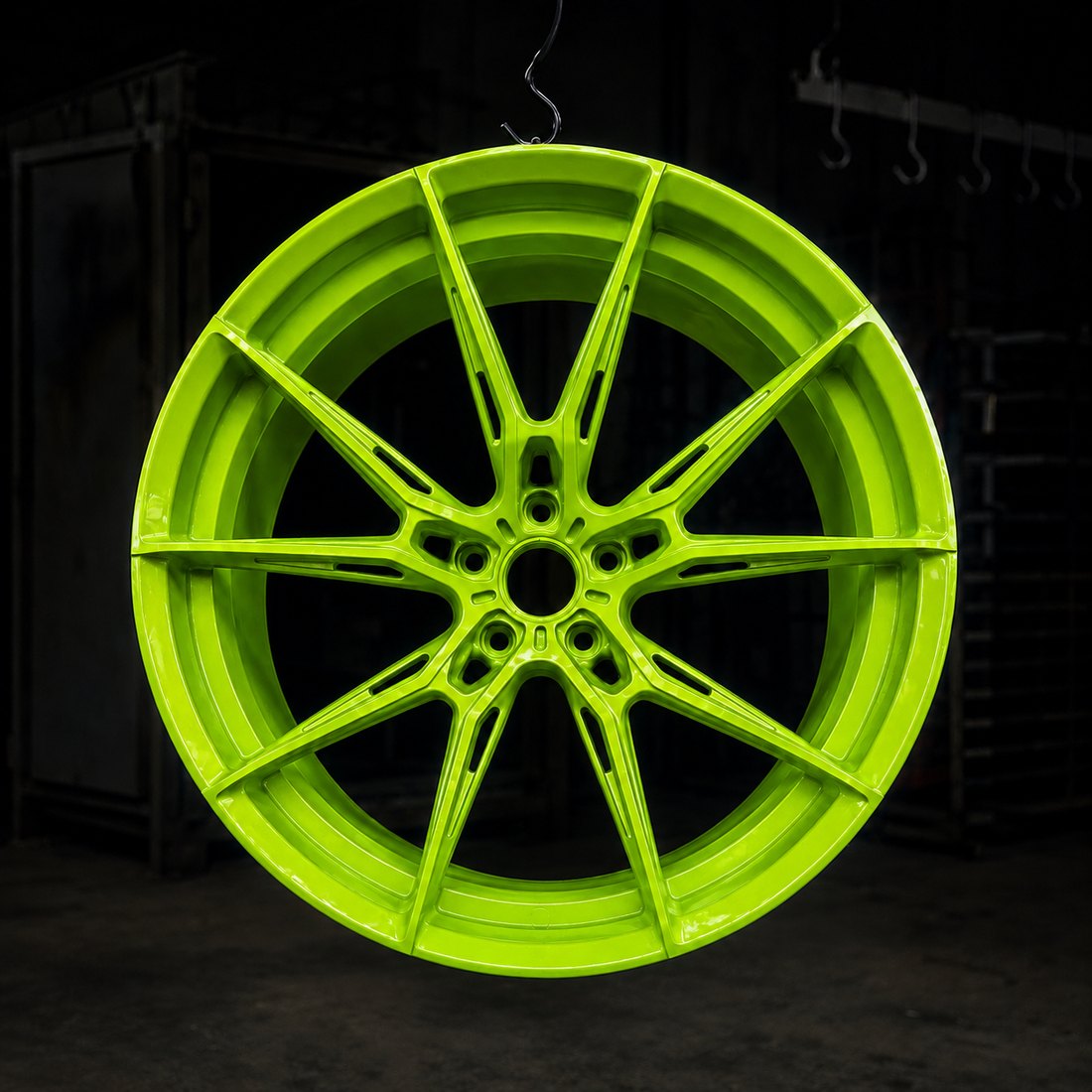
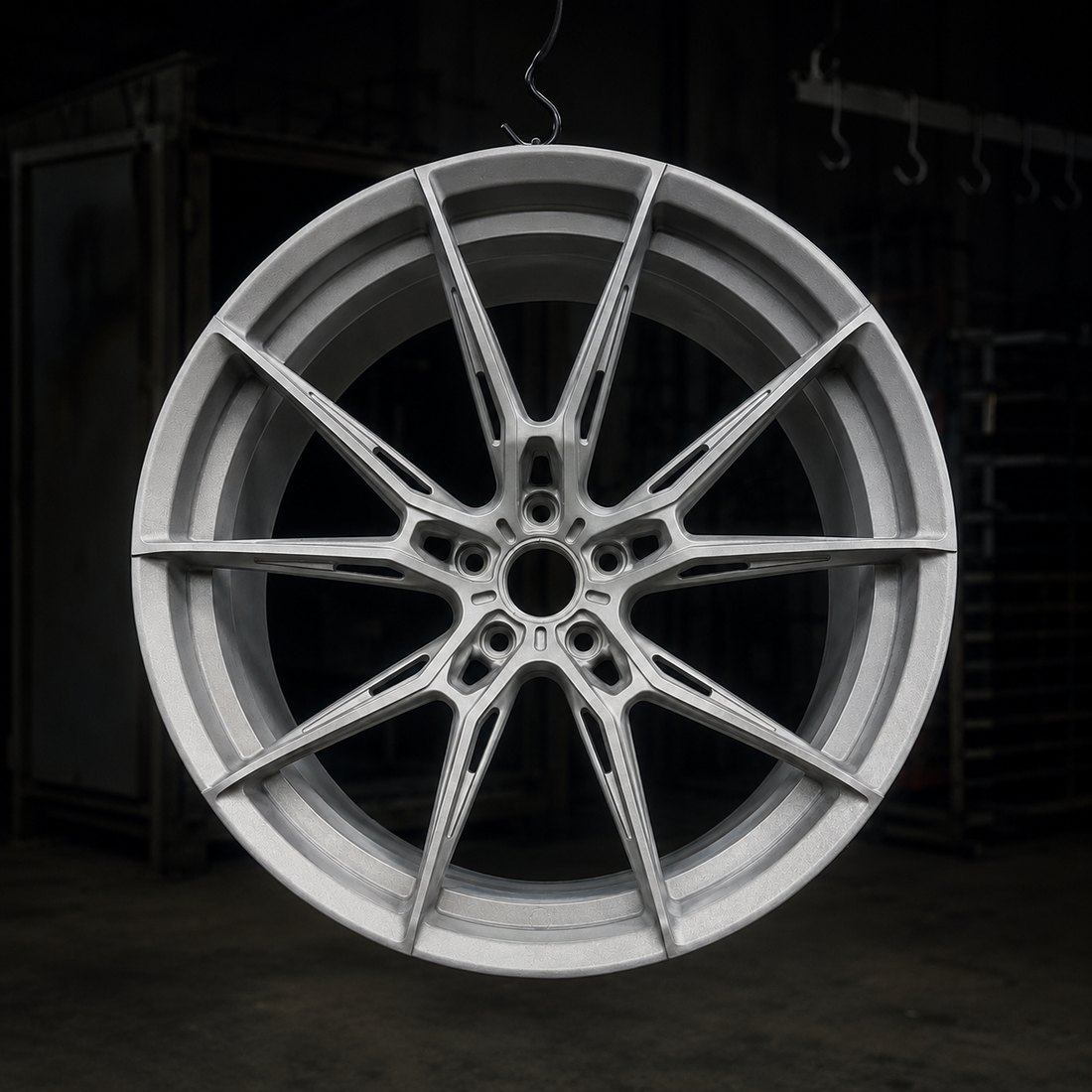
One put up a rear axle he had degreased, blasted, outgassed, masked and coated in three stages. "I think I shot myself in the foot at $275. Wasn't a hard job, just thinking I left money on the table." The shop answers came back at $550, $600, $800 to $1,000, and $1,000. One did the arithmetic for him: "You made absolutely nothing on this job."
He had already done the work. The pricing decision took ten seconds and cost more than the day.
It starts at the counter, where the number gets made up. A man with a hitch frame on the bench, cleaned, blasted, baked out for three and a half hours, chrome base then color then clear, wrote it plainly: "I have no idea what to charge." That sentence, in various spellings, is the most common sentence in this trade.
Then it follows you to the end of the job. A coater explaining how to price a two-tone set said the quiet part: price it properly and you are never "standing there at the end of the job going, well I did these for free."
And it costs you jobs you were right to lose. Everybody knows what the cheap quote usually is: "There's a lot of people in the coating world who will do jobs for no profit just to get customers. They generally do poor work, and don't stick around too long." Knowing that does not get you the job back, and it does not tell you whether the man who beat you was underwater or whether you were the one out of line.
Everything the trade tries instead, and why none of it holds
Ask the group. Over 200 answers, $650 to $4,000. Nobody is lying to you. They are quoting their own oven, their own overhead, their own town, and none of that is yours. The most honest reply in any of those threads says so out loud: "Prices vary across the board. Opinions given here only get you close."
Match the shop down the road. Now his bad math is your bad math, and it was never yours to copy: "Is this a side job you're doing out of your home? Or are you an actual shop with a building you lease, with insurance, employees, overhead?" Copy his number and you inherit a cost structure you do not have.
Work off an hourly rate. The advice is right and it stops one step short: "You need to know what it cost to run your shop and how much you want to make per hour. Then figure out how many hours it will take." The hours are the part you guess, and the guess runs low every time. "Everything under $200 seems too expensive, but then you spend four hours on it and realize there's a minimum cost."
Powder cost times some number. The trade's own version, posted as a favor to the garage guys: "Powder cost times 3. $85 per hour. Shop supplies times 3." Run his own worked example and the raw powder is $70 of a $367 job. You are multiplying the smallest number on the invoice and hoping it lands on the right total.
Go on feel. Nine years in: "You charge what you think feels right. Some say my shop is very reasonably priced and some say I'm way too high." Four years in, the method written out loud: "I still under sell myself. I try and add $50 to the first number that comes to mind when quoting."
That last one is the whole trade in a sentence. The first number that comes to mind, plus fifty.
So we counted
We read a year of the trade's own pricing conversations, thousands of posts and comments across the communities where coaters actually talk, and we wrote down every number. More than 2,000 prices, stated by working shops, organized by job.
Then we threw half of them away. A price is worth nothing unless you know what job it was attached to, so a number only counted when the job it named sat right beside it. That left the 1,000-plus where a working shop said what the work was and what they charged for it.
As far as we can tell, nobody had ever done this. Not because it is difficult, but because nobody is in a position to. A shop sees its own numbers and whatever scatters through a comment thread. A supplier is not allowed to look. It took somebody inside the industry with no powder to sell to bother.
What came out of it
Thirteen job types with enough real prices behind them to publish, each with the middle of the market and the spread.
The one that stopped us was wheels, 227 prices behind it. A quarter of shops are at $125 a wheel or less. A quarter are at $300 or more. Same wheel, same powder, same week, and the shop at the bottom of that band is doing identical work for less than half of what the shop at the top gets.
The shop minimum is worse, because it is the one number a shop sets on its own with nobody's permission. Fifty-seven shops stated theirs. The middle sits at $150 and so does the top quarter, which means the market has already agreed on the answer. Shops are still saying it out loud at $50 and $60.
| Job | Median | Typical range |
|---|---|---|
| Wheels, per wheel | $175 | $125 to $300 |
| Wheels, per set | $700 | $500 to $1,200 |
| Shop minimum | $150 | $75 to $150 |
| Frames, cages, chassis | •••• | in the book |
| Patio furniture | •••• | in the book |
| Small parts, per piece | •••• | in the book |
| Per linear foot | •••• | in the book |
| Exhaust, headers, mufflers | •••• | in the book |
| Calipers | •••• | in the book |
| Hourly rate | •••• | in the book |
Four things the numbers say
The middle of the market is real and knowable. Wheels: $175 a wheel at the median, $500 to $1,200 a set. Shop minimum: $150. It's just never been written down before.
The spread is 3x to 6x on identical work. Because nobody knows the number.
The cheapest shops aren't winning, they're losing money on every job. "$150 per wheel. Anything less you're not going to retire," as one put it, while the market pays $1,100 a set all day.
The shops that know their numbers use the same few rules: cost plus margin, 25 to 50% more per stage, a real minimum. The trade already invented the system. It's scattered across ten thousand posts. Nobody ever collected it.
The most expensive habit in the trade
Almost nobody is underpricing on purpose. They set a ceiling years ago at a number that felt safe, and nothing has ever told them otherwise.
Go back to the man who wouldn't expect to charge more than $150 a wheel. He is not lazy and he is not bad at his job. He picked a number once, it did not get argued with, and it became the roof. Four wheels at his ceiling is $600 a set. The shop across the state gets $1,100 for the same work and says customers rarely blink.
That is five hundred dollars, on one set, sitting on the bench. He will do another set this week, and the week after. Nobody will ever tell him, because the only people who could are either his competitors or legally gagged.
He is not being beaten by a better shop. He is being beaten by a number he made up once and never checked.
Nobody ever wrote the numbers down
None of this is a skill problem. The shops in those threads know how to coat. The man quoting $600 and the man getting $1,100 would hang the same wheels, run the same schedule and pull the same finish.
The difference between them is not talent. It is information, and only one of them has it.
That is the part that can be fixed. You cannot get better at guessing. You can stop guessing.
For as long as this trade has existed, the only way to find out what a job is worth has been to ask a room of people who are working it out too, and hope the loudest answer is close. That is not a failing of the people in the room. They were never given anything better to work from.
What we did with it
We collected it, finished the math, and called it The 2027 Powder Coating Price Book.
Everything above is what the trade's own numbers look like from the outside. The book is the part you can use on Monday morning: the market's numbers, and a way of getting to yours.
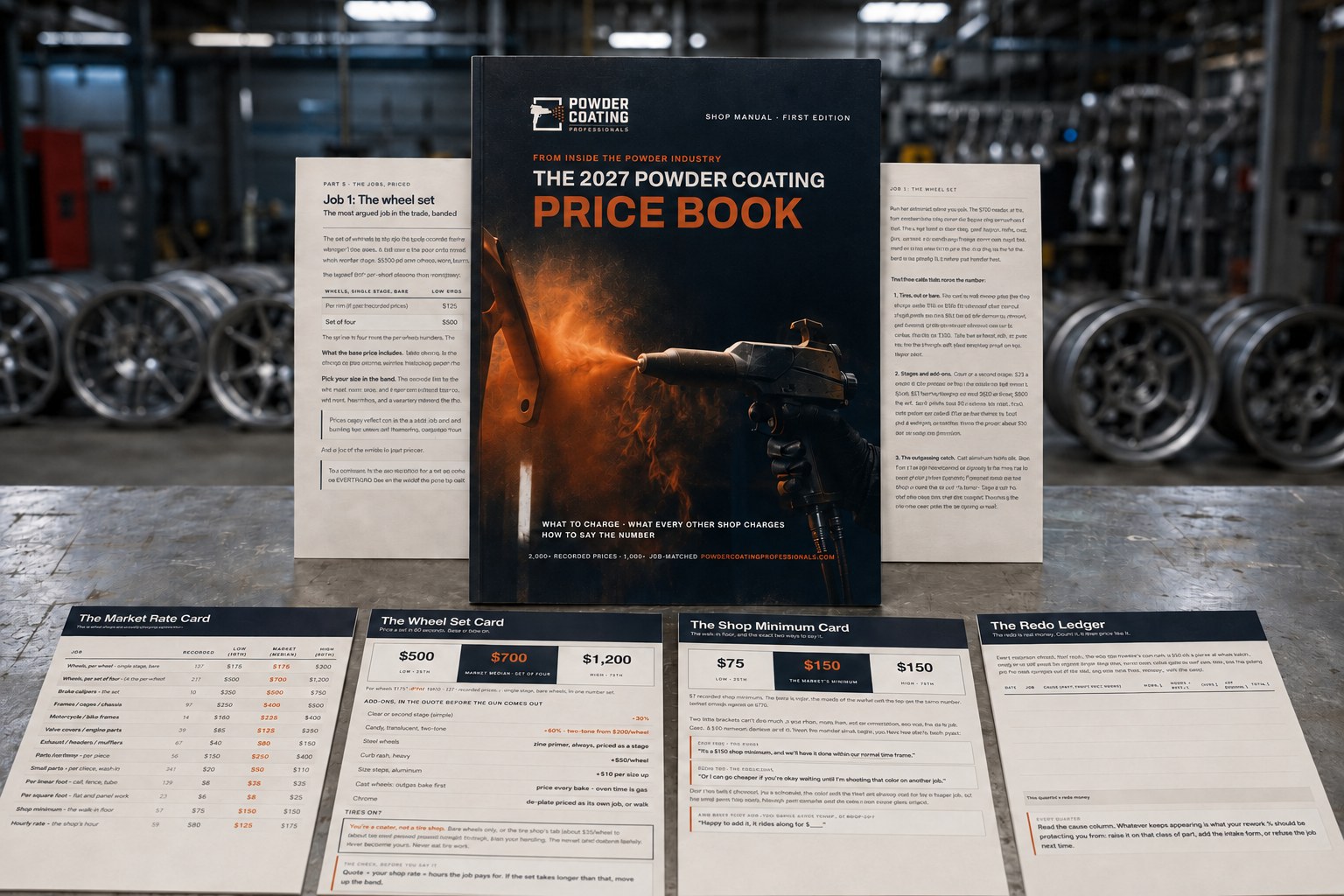
The Price Book. 30 pages, numbered steps, five jobs priced start to finish (wheel set, frame, patio set, 70-piece batch, per-foot work).
The Job Pricing Calculator. Your rent, power, insurance and wage, plus your powder price, real transfer efficiency, prep, oven and rework. Five minutes to a defensible number.
The Market Rate Card. What shops actually charge, by job, median and spread. More than 2,000 prices recorded, kept to the 1,000+ that name the exact job: a price without the job attached is noise, and we don't count noise. This has never existed for this trade.
Plus three bench cards, made to print:
The Wheel Set Card. Price a set in 60 seconds, bare or tires-on.
The Shop Minimum Card. The market says $150; the exact two ways to say it at the counter.
The Redo Ledger. What a strip-and-recoat really costs you, filled in for your shop.
A PDF30-day money-back guarantee
What changes on Monday
| Quoting now | Quoting with the Price Book |
|---|---|
| The number comes from your gut | The number comes from your costs |
| Strangers on Facebook price your jobs | You answer the "what would you charge?" posts |
| $50 minimum because saying more feels rude | $150 minimum, said two ways, no apology |
| The redo comes out of your pocket, uncounted | Rework is a line on every quote |
| No idea where you sit in the market | Your price, next to the market's, on one card |
Who it's for
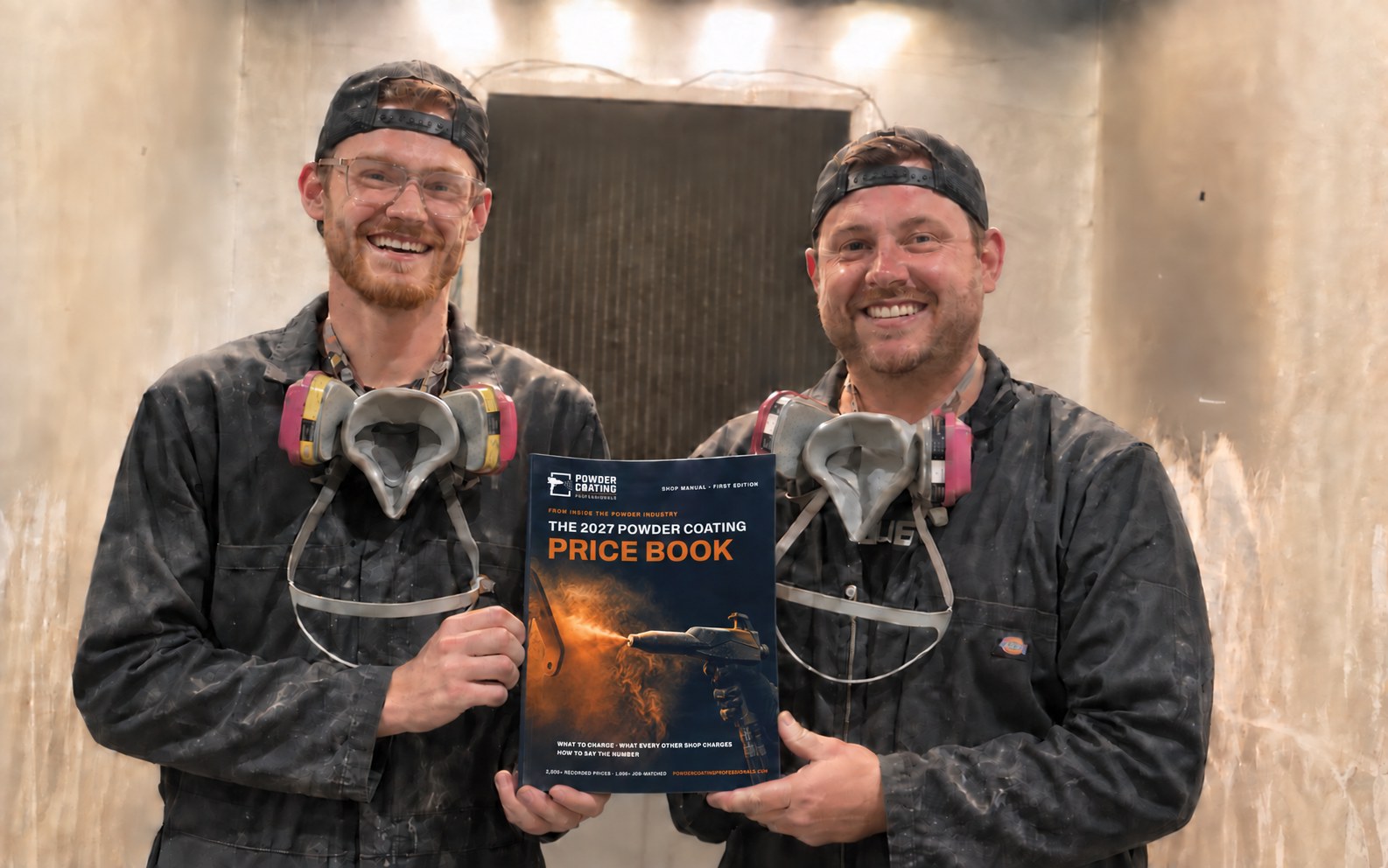
The owner-operator: one man in a garage bay to a five-man shop. If you shoot powder for money, this is your trade's numbers, finally written down.
Who it isn't for
Not for hobbyists doing their own parts (nothing here about technique, you already know how to coat), and not for the shop that already knows its cost per square foot to the cent. If that's you, you're the one the rate card is quoting.
What shops did with it
"Been coating a long time and didn't think a $9 book was going to tell me much. I was wrong. The rate card showed me I was sitting at the bottom of the market on wheels even though I've got real overhead. This ain't a how-to book. It's the pricing side nobody ever writes down."
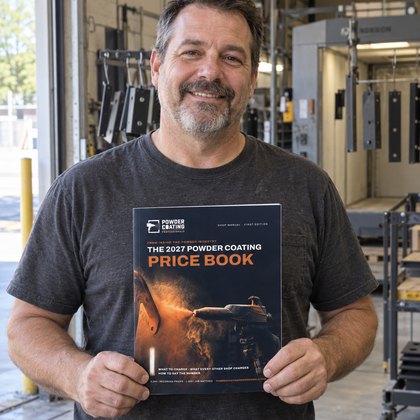 Owner-operator, powder coating shop, Central Florida
"I been doing this near fifteen years and still caught myself looking at a part thinking, hell, what do I charge for that? This book put actual numbers to it. Not somebody's cousin doing wheels in his garage for beer money, real shop prices. I was too cheap on frames and way too cheap on anything with heavy prep. Fixed that real quick."
 Lead powder coater, custom finishing shop, Western Pennsylvania
"I put my rent, power, insurance and my own wage into the calculator. My hourly rate wasn't what I thought it was. Then I ran a batch job through it that I thought was easy money. Barely made anything on it. Worth the nine bucks right there."
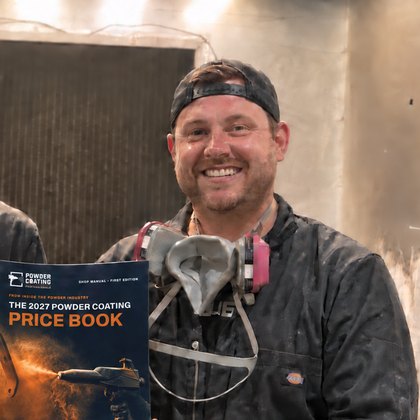 Owner, three-person powder coating shop, East Texas
"I'm a one-man deal, so if I price a job wrong, I'm the one sweating for free. Ran my bills through the calculator and found out my shop rate needed to be a whole lot higher than what I'd been using. Now I cost it, check the rate card and say the number. If they don't like it, that's all right. At least I ain't paying to coat their parts."
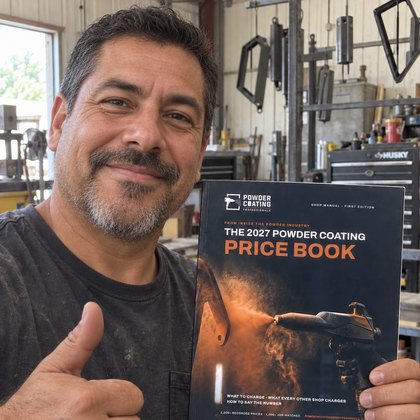 Independent powder coater, one-person shop, Rural Oklahoma
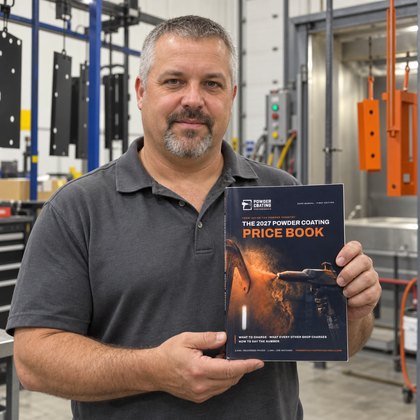
"I used to post a picture in the group and get numbers from $300 to $1,200. Now I cost the job, check the card and give the customer one number. If the guy down the road is cheaper, that's fine. At least I know what it costs me to do it right."
 Shop manager, commercial powder coating operation, Southern California
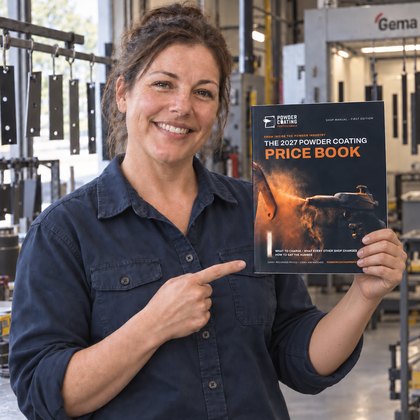
"The shop minimum card is staying by the counter. Two little brackets still mean a full setup, gun clean and oven heat, and I was basically giving that away. The redo ledger wasn't fun to fill out either, but I needed to see it. No fluff in this thing."
 Co-owner, automotive powder coating shop, Middle Tennessee
30-day money-back guarantee.
If it's not worth it to your shop, email us within 30 days of buying and we'll refund the $9.
The next photo in the group
Somewhere this week another shop owner will post a photo of a job he has not priced yet and ask what to charge. The answers will not agree. He will read all of them and still have to pick a number on his own.
That is the part a thread has never been able to do for anyone. It can tell you what strangers would charge in their shop, in their state, with their oven and their rent. It cannot tell you what the work costs in yours.
You can keep asking. Most of the trade will. Or you can be the one answering.
Questions
Who are you, exactly?
People who work inside the powder industry and got tired of watching good shops undercharge. We don't sell powder, equipment, or anything else on this page, and no supplier's name appears in the book. The book doesn't care whose powder you shoot.
I've been coating for 15 years. What's in this for me?
Not technique, we promise. You know how to coat. This is what the market charges and a system for knowing your number before the customer asks. The man leaving $500 a set on the table has been coating a long time too.
Where do the market prices come from?
More than 2,000 prices stated publicly by working shops across the trade's own communities in the last year. The rate card keeps the 1,000+ that name the exact job, organized by job type. Anonymous, aggregated, and we show the spread, not just an average.
Will this work for my region?
The rate card shows the middle of the market and the range. High cost-of-living areas sit at the top of the band, rural shops nearer the bottom. The calculator prices from YOUR costs either way, which is the part that matters.
Is it printed?
PDF, built for the phone and for print. The three cards are made to be printed and stuck up in the shop.
When do I get it?
The download email lands within about fifteen minutes of purchase.
The next job through your door needs a number.
$9, and you'll have it in five minutes.
The price goes up when the next edition of the rate card ships.

Results depend on your shop and your market. The market rate card reports what shops have publicly stated they charge; it is not a recommendation to charge any particular price, and you set your own prices independently.
This site is not a part of the Facebook (Meta) website or Meta Platforms, Inc. Additionally, this site is not endorsed by Meta in any way. FACEBOOK and META are trademarks of Meta Platforms, Inc.
© 2026 Powder Coating Professionals